
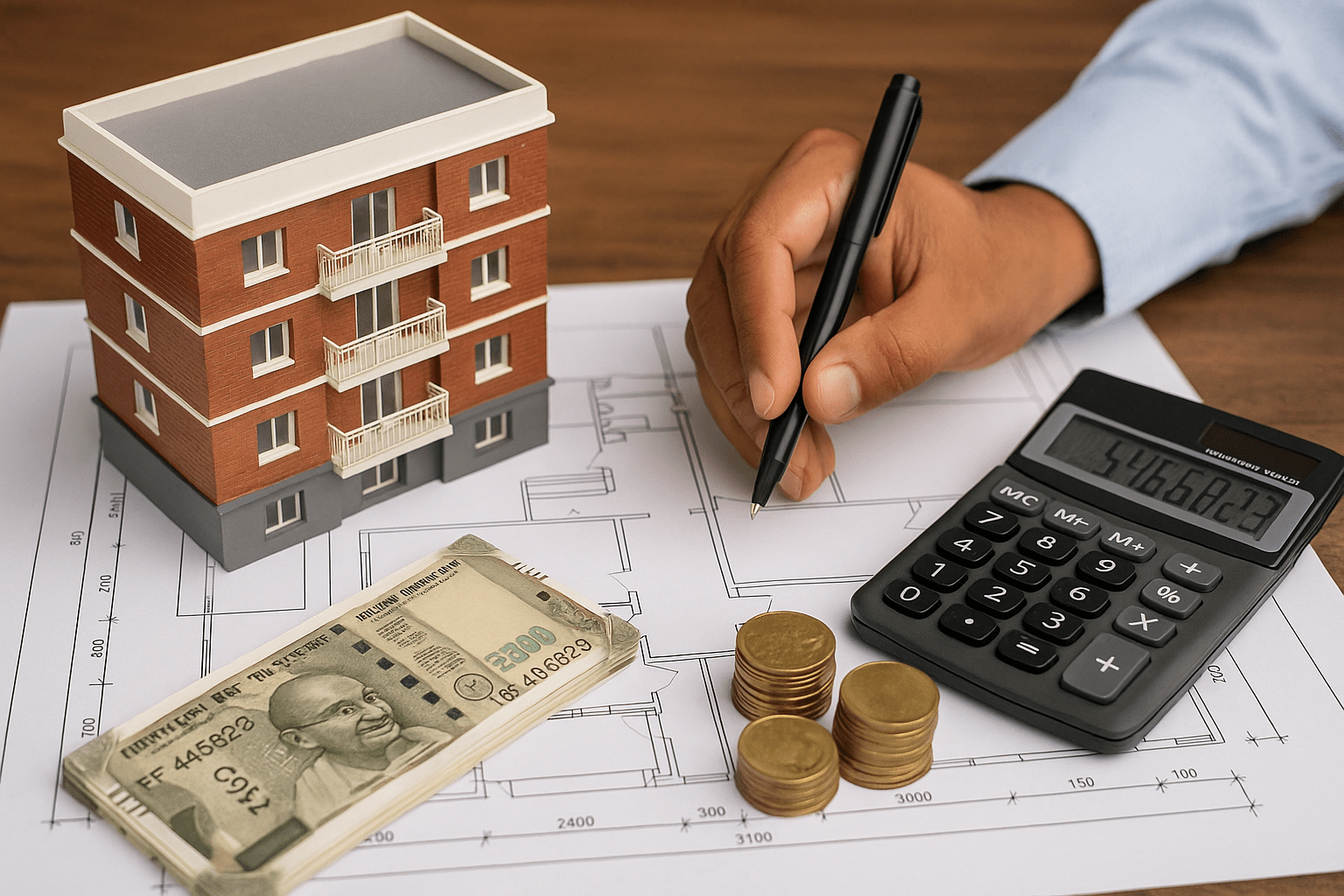
In real estate development, construction is as much a financial endeavour as it is an engineering one. Whether you’re building a luxury villa or launching a multi-acre township, success begins not with bricks but with budgets. In India, where land prices, regulatory complexity, and inflation often challenge even the most seasoned developers, accurate cost estimation becomes the foundation of profitability.
For developers, lenders, investors, and serious homebuilders alike, cost estimation is not just about anticipating expense, it’s about creating predictability and risk resilience in an uncertain environment.
What Is Cost Estimation in Real Estate?
Cost estimation is the structured process of calculating all projected expenses associated with delivering a real estate project, from land purchase to final handover. It includes:
- Direct Costs: Physical construction, materials, and labour
- Indirect Costs: Fees, approvals, financing, contingency, and holding charges
A comprehensive cost estimate supports feasibility assessments, funding strategies, pricing decisions, and timeline management.
Key Components of Cost in Indian Construction Projects
1. Land Acquisition
Land often forms the largest portion of the project’s budget, especially in urban metros. It includes:
- Market-linked purchase price
- Stamp duty and registration fees (typically 5–12%)
- Brokerage or facilitation costs
- Legal verification and land use conversion (e.g., from agricultural to non-agricultural)
Location-specific restrictions, like CRZ norms or heritage designations, can introduce hidden costs or usage limitations.
2. Civil Construction Costs
This refers to the actual physical structure and core building work, including:
- Site preparation, excavation, and foundations
- RCC framework, brickwork, and formwork
- Internal works (plastering, flooring, waterproofing)
- External works (roofing, façade finishes)
Civil costs are often benchmarked on a per sq. ft. basis and vary depending on city, building typology, and quality of finishes.
3. Material Costs
Materials account for nearly 50–60% of total construction costs, and include:
- Cement and steel (subject to price volatility)
- Bricks, aggregates, sand (regional price variations)
- MEP (mechanical, electrical, plumbing) systems
- Finishing materials: tiles, windows, doors, fixtures
Global supply fluctuations, due to fuel prices, imports, or geopolitical issues, can significantly impact this component.
4. Labour Costs
Labour makes up about 25–35% of overall construction expenditure and depends on:
- Regional wage rates (which may vary seasonally)
- Compliance with the BOCW Act and safety norms
- Cost of on-site provisions: housing, sanitation, safety gear
In metro cities, growing unionisation and rising minimum wages are increasing the need for structured labour cost planning.
5. Professional Fees
A well-designed and legally compliant project requires expert input:
- Architects and structural engineers: 3–5% of project cost
- MEP, landscape, façade, and green building consultants
- RERA consultants, legal teams, and financial advisors
These professionals aren’t just supporters, they shape marketability, compliance, and differentiation.
6. Project Management and Site Operations
- Hiring a Project Management Consultant (PMC) or an in-house team
- Equipment rental: scaffolding, cranes, formwork systems
- Site logistics, temporary utilities, safety measures
- Technology tools (e.g., drones, BIM, project dashboards) for progress tracking
Often Overlooked But Critical Costs
- Soil Testing and Geotechnical Surveys: Especially in coastal or reclaimed land zones
- Regulatory Delays: Holding costs, penalties due to slow approvals
- Litigation Reserves: Legal buffers for land title or encroachment disputes
- Interest During Construction (IDC): Cost of servicing debt during the build phase
- GST: Applicable on contracts, consultant fees, and materials, adds significant budget impact
Why Cost Estimation is a Strategic Imperative
An accurate estimate is not just a financial control, it’s the blueprint of your execution strategy. Underestimating costs can derail funding, delay timelines, or erode margins. Overestimating may render the project unviable in a competitive market.
A good estimate ensures:
- Investor confidence and financial discipline
- Timely drawdowns aligned with construction milestones
- Faster approvals from banks and NBFCs
- Strategic pricing aligned with market realities and profit targets
In Indian real estate, where development cycles are long, risks are real, and capital is high-stakes, cost estimation is not just a backend exercise. It is the first step in building trust, viability, and long-term value.
Because before you build walls, you must build confidence in your numbers.