
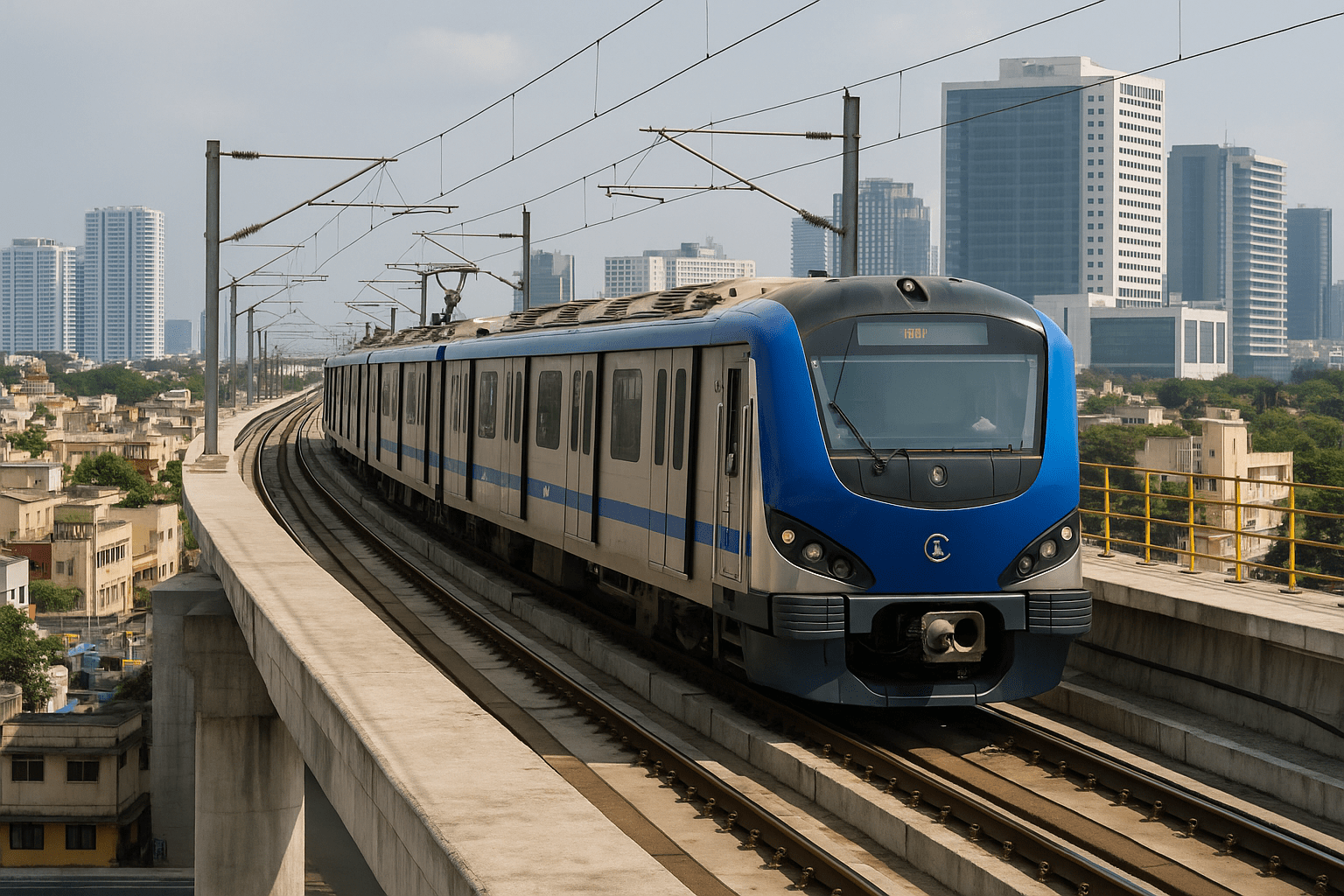
As Indian cities grapple with rapid urbanisation, one factor is playing an outsized role in transforming their form and function: Mass Rapid Transit Systems (MRTS). Beyond improving mobility, MRTS projects are emerging as powerful drivers of real estate value, reshaping neighbourhoods, redistributing growth, and redefining how cities are experienced and invested in.
From the Delhi Metro to the Kochi Water Metro, India’s transit systems are not just solving traffic problems, they’re altering the urban real estate map.
What is MRTS in the Indian Context?
Mass Rapid Transit Systems refer to high-capacity, high-frequency public transportation networks, including:
- Metro Rail (e.g., Delhi Metro, Bengaluru’s Namma Metro)
- Bus Rapid Transit Systems (BRTS) (e.g., Ahmedabad BRTS)
- Light Rail Transit (LRT) and Monorail systems
These systems offer a scalable solution to congestion, but their influence goes far beyond transportation, they help shape cities structurally, economically, and socially.
How MRTS Is Transforming Real Estate in India
1. Rising Property Values Near Transit Nodes
Proximity to a metro or BRT station significantly boosts property prices, often by 10–20% more than city-wide averages. This uplift is most visible within a 500–800 metre radius of operational stations, where reduced travel times and better connectivity create strong demand.
In India’s dense urban cores, where location and connectivity are at a premium, MRTS access has become a key differentiator for real estate value appreciation.
2. Commercial Spaces Benefit from Transit Proximity
Businesses increasingly favour locations near MRTS corridors. Offices close to metro lines offer easier commutes, attract a wider talent pool, and align with environmental, social, and governance (ESG) principles.
This is reflected in:
- Co-working hubs near metro stations (e.g., HUDA City Centre in Gurugram)
- Retail growth in station-adjacent locations, benefiting from steady footfall
MRTS nodes are evolving into urban magnets, centres of economic activity and consumption.
3. Peripheral Zones Become Growth Corridors
Transit access unlocks new development potential in previously peripheral or low-demand areas. Locations like Taloja (Navi Mumbai), Whitefield (Bengaluru), Noida Extension, and Pimpri-Chinchwad (Pune) have rapidly transitioned into active real estate submarkets.
This shift supports more balanced urban expansion, reducing pressure on central business districts while offering affordable housing and commercial space in transit-connected zones.
4. Improved Rental Yields and Investment Returns
For investors, properties near MRTS infrastructure typically offer:
- Higher rental demand and occupancy
- Lower tenant churn
- 0.5% to 1.5% higher rental yields than non-connected peers
This is particularly beneficial in cities where housing stock is growing but tenant preferences lean toward well-connected neighbourhoods.
5. Integration with Transit-Oriented Development (TOD)
Urban planning authorities are increasingly adopting Transit-Oriented Development (TOD) policies. These promote dense, mixed-use communities within walking distance of MRTS nodes, combining residential, commercial, and recreational spaces in a compact footprint.
States like Delhi and Maharashtra have introduced dedicated TOD frameworks, encouraging vertical growth, improved infrastructure, and more efficient land use.
Points of Caution: MRTS-Linked Real Estate Is Not Without Risk
While MRTS can significantly enhance real estate value, it’s important to be strategic and informed:
- Speculation: Prices often rise around proposed MRTS lines, even before approvals or construction begin. Not all projects progress on schedule.
- Construction-phase disruption: Ongoing metro work can temporarily reduce livability and marketability.
- Zoning and FSI confusion: Regulations near transit nodes may be revised, but not always clearly communicated, so diligence is key.
Smart Moves for Buyers and Developers
To leverage MRTS effectively:
- Invest near approved corridors, ideally where construction is underway or nearing completion.
- Choose RERA-registered projects near operational or planned stations.
- Look for interchange stations, they carry the highest connectivity and long-term value.
- Evaluate last-mile connectivity (walkability, feeder services), not just proximity on a map.
MRTS is no longer just a public utility, it is a strategic urban asset. Its ability to redistribute land value, shape urban form, and define market trajectories makes it a central concern for all real estate stakeholders.
For developers, it unlocks new land supply and higher FSI. For investors, it signals long-term appreciation and rental security. For homebuyers, it offers a blend of convenience, connectivity, and quality of life.
In India’s evolving cities, understanding the intersection of transit and real estate is essential, not just to capitalize on current trends, but to help build more connected, inclusive, and efficient urban futures.