
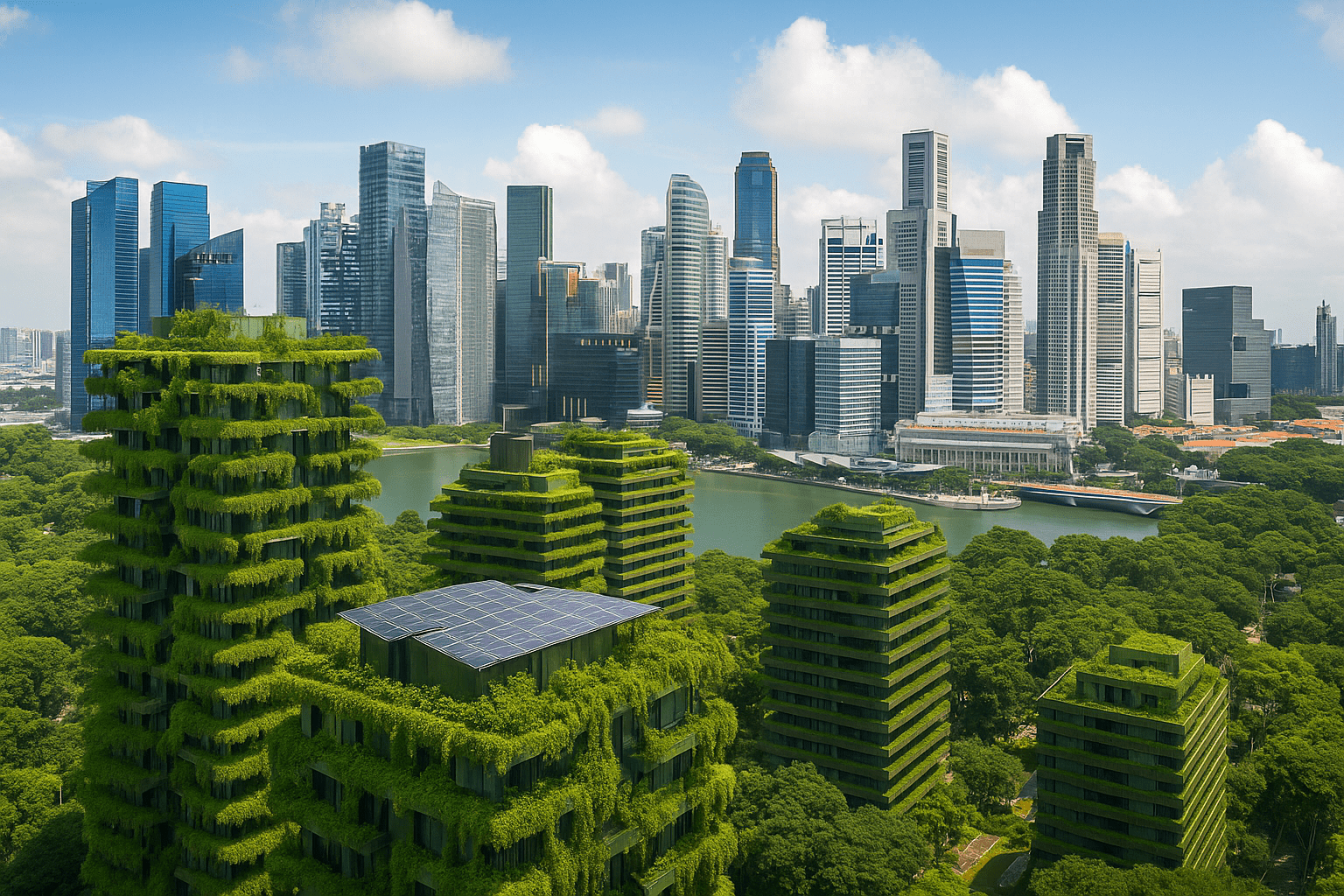
As India’s cities grow denser and hotter, the way we build and live must change. With over 600 million people expected to live in urban areas by 2036 and buildings consuming close to 40% of the country’s energy, real estate is no longer just about returns or aesthetics. It’s about long-term responsibility. Sustainable development is no longer a luxury; it’s an essential part of how we future-proof our cities and protect our environment.
What Is Sustainable Real Estate?
Sustainable or “green” real estate refers to the design, construction, and operation of buildings that reduce environmental impact while improving the health, comfort, and efficiency of their occupants. This doesn’t only apply to glass towers or elite townships. Today, sustainability is as relevant to affordable housing and mid-sized developments as it is to large-scale commercial projects.
In India, where urban growth and climate challenges intersect sharply, green real estate plays a central role in balancing development with ecological responsibility.
Why Green Real Estate Is No Longer Optional
- Water Stress: India holds 17% of the world’s population but has just 4% of its freshwater resources. Growing cities are straining this limited supply.
- Energy Consumption: Residential and commercial buildings together contribute significantly to India’s carbon emissions and electricity demand, most of which still comes from fossil fuels.
- Global Commitments: India’s pledge to reach net-zero emissions by 2070 places a clear responsibility on the building sector, given the long lifespan of real estate assets.
Key Practices Powering Sustainable Real Estate in India
1. Eco-Friendly Construction Materials
Builders are increasingly using materials like fly ash bricks, recycled steel, low-VOC paints, and bamboo to reduce the environmental impact of construction.
2. Water Conservation Systems
Rainwater harvesting, greywater recycling, dual plumbing, and smart water meters help reduce water consumption in cities facing severe water shortages.
3. Energy Efficiency
Design plays a key role here, proper orientation, high-efficiency glass, rooftop solar panels, LED lighting, and energy-efficient HVAC systems together cut electricity use significantly.
4. Passive Cooling and Ventilation
Design features like open courtyards, cross-ventilation, shaded balconies, and sun-reflecting surfaces reduce reliance on air-conditioning, especially in India’s warm climate zones.
5. Waste Management at the Source
Segregating waste, composting organic matter, and installing e-waste bins are now standard in many green-certified residential projects.
6. Better Urban Planning
Many sustainable developments align with Transit-Oriented Development (TOD) principles, focusing on walkability, mixed land use, and proximity to public transport to reduce dependence on personal vehicles.
7. Green Landscaping
Planting native trees, installing green roofs, and using permeable pavements all contribute to better drainage, cooler microclimates, and improved air quality in dense cities.
Green Certifications in India
Several nationally and internationally recognised frameworks help benchmark sustainability in real estate:
- IGBC (Indian Green Building Council)
- GRIHA (Green Rating for Integrated Habitat Assessment)
- EDGE (Excellence in Design for Greater Efficiencies, by IFC)
These systems offer credibility, performance tracking, and in some cases, incentives from state governments.
Why It Makes Business Sense
Green buildings are not only better for the environment, they also make financial sense:
- Lower utility bills due to efficient energy and water systems
- Higher resale and rental value due to increased demand
- Better access to green finance, including ESG-compliant funds and sustainability-linked loans
- Higher trust and transparency, especially relevant for institutional investors and REITs
Sustainable real estate is no longer a niche or premium offering. It’s becoming the new standard. For developers, it means future-proofing assets and staying ahead of regulations. For investors, it provides resilience and long-term value. For homebuyers, it offers better living conditions and reduced costs.
In India’s journey towards urban and climate resilience, green buildings will not just shape our skylines, they will define our legacy.