
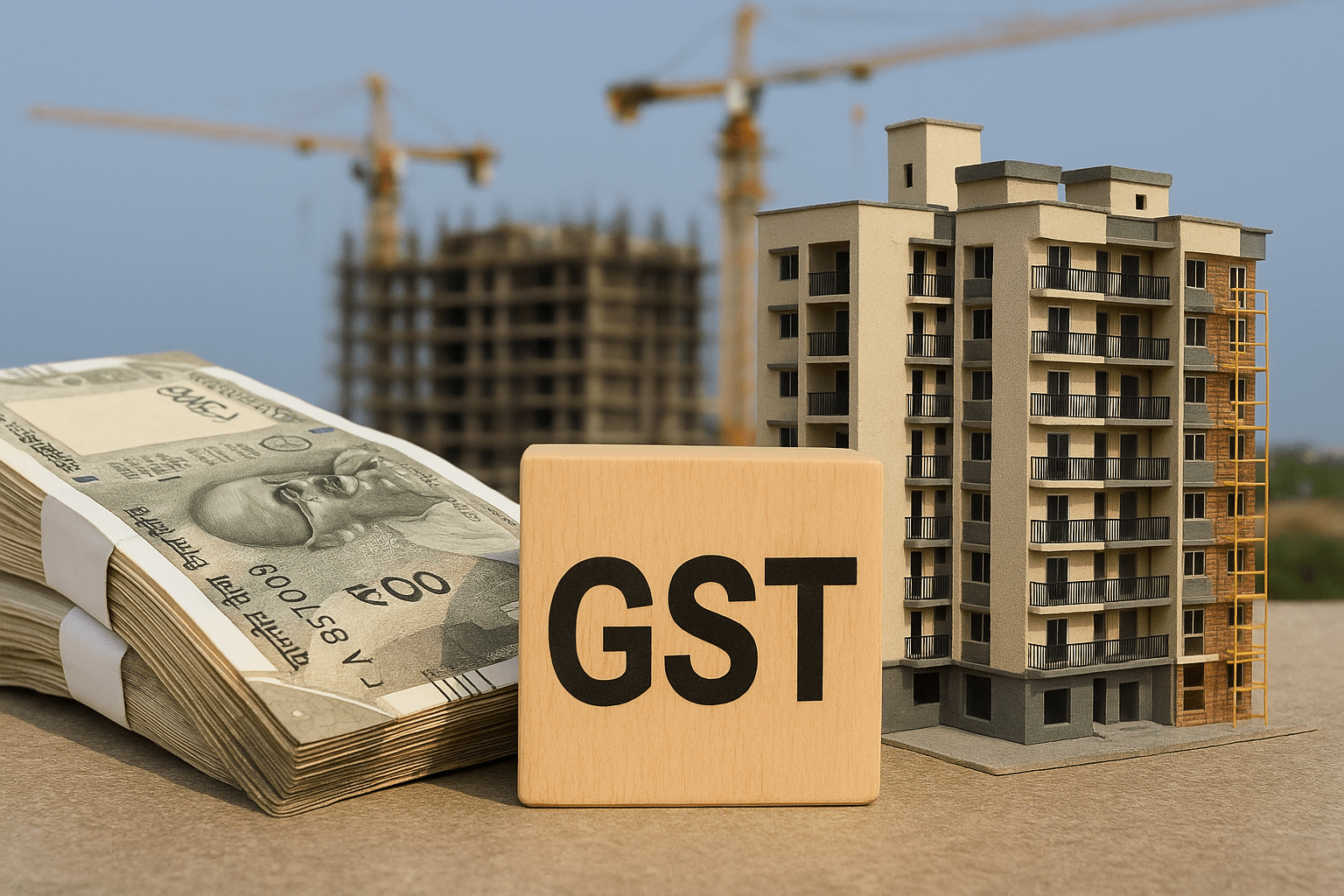
When the Goods and Services Tax (GST) was introduced in 2017, it reshaped how taxes were levied across industries. For real estate, often criticised for its complexity and lack of transparency, GST was a game-changer. But its effect is particularly significant for one category: under-construction residential properties.
Whether you’re a homebuyer or a developer, understanding how GST applies to these properties is crucial for making informed financial and strategic decisions.
GST in Real Estate: What It Applies To
In simple terms, GST is levied only on under-construction properties, not on completed ones. If a home has already received an Occupancy Certificate (OC), it is treated as a sale of immovable property and is therefore exempt from GST.
So, if you’re buying a completed home, no GST applies. But if the project is still under construction, GST will be part of your total cost.
The 2019 Rule Change: Lower GST, But No Input Tax Credit (ITC)
Before April 2019, under-construction homes were taxed at 12%, and developers could claim Input Tax Credit (ITC), essentially a way to reduce the tax they paid on materials like cement and steel.
But since most developers weren’t passing those benefits to buyers, the government simplified the rules:
- 5% GST on regular under-construction homes
- 1% GST on affordable homes
- No ITC allowed under the new regime
This made pricing more transparent for buyers, but forced developers to adjust their cost structures.
What This Means for You as a Homebuyer
1. Completed Homes Have No GST
Buying a ready-to-move-in home? You don’t pay GST. This alone has driven many buyers toward completed inventory to avoid tax-related complexity and construction delays.
2. Under-Construction Homes Come With GST
If you’re buying before the project is completed:
- 5% GST applies to standard housing
- 1% GST applies for affordable housing (homes under ₹45 lakh and up to 60 sq. m. carpet area in metros)
3. GST Is Extra, Not a Replacement
Remember: GST doesn’t replace stamp duty (typically 5–7%) or registration fees (about 1%). These are state-level charges and are paid in addition to GST.
So, your final cost includes:
- GST (1% or 5%)
- Stamp duty
- Registration charges
- Additional costs like maintenance deposits or society charges
What Developers Are Dealing With
Higher Base Prices
Since developers can’t claim ITC anymore, many increase the base price to offset their cost of materials and services.
Shift Toward Completed Projects
To avoid losing customers due to GST, many builders are speeding up construction or focusing on ready-to-move homes.
Strained Cash Flow
Without ITC, developers pay more upfront for inputs. This affects their working capital, especially in phased or large-scale projects.
How to Navigate the GST Landscape as a Buyer
Here are a few practical tips:
Ask for a full price breakdown: Don’t assume the quoted price includes GST. Ask for the GST amount separately to avoid surprises.
Factor in total costs: Include stamp duty, registration, and other charges when budgeting. GST is just one part of the bigger picture.
Assess project stage risks: Buying early might get you a lower price, but you’ll pay GST and take on more risk.
Check for affordable housing eligibility: If your home qualifies for the 1% GST rate, you could save significantly.
The GST regime has brought more clarity and consistency to real estate taxation, but it has also added layers that buyers must understand. For under-construction homes, the tax is real, but manageable, if you go in informed.
At the end of the day, GST should not be viewed in isolation. It’s just one piece of the puzzle. A smart homebuyer looks at the full cost, the stage of construction, the legal status, and the reputation of the developer.
GST adds predictability, and your due diligence ensures value.