
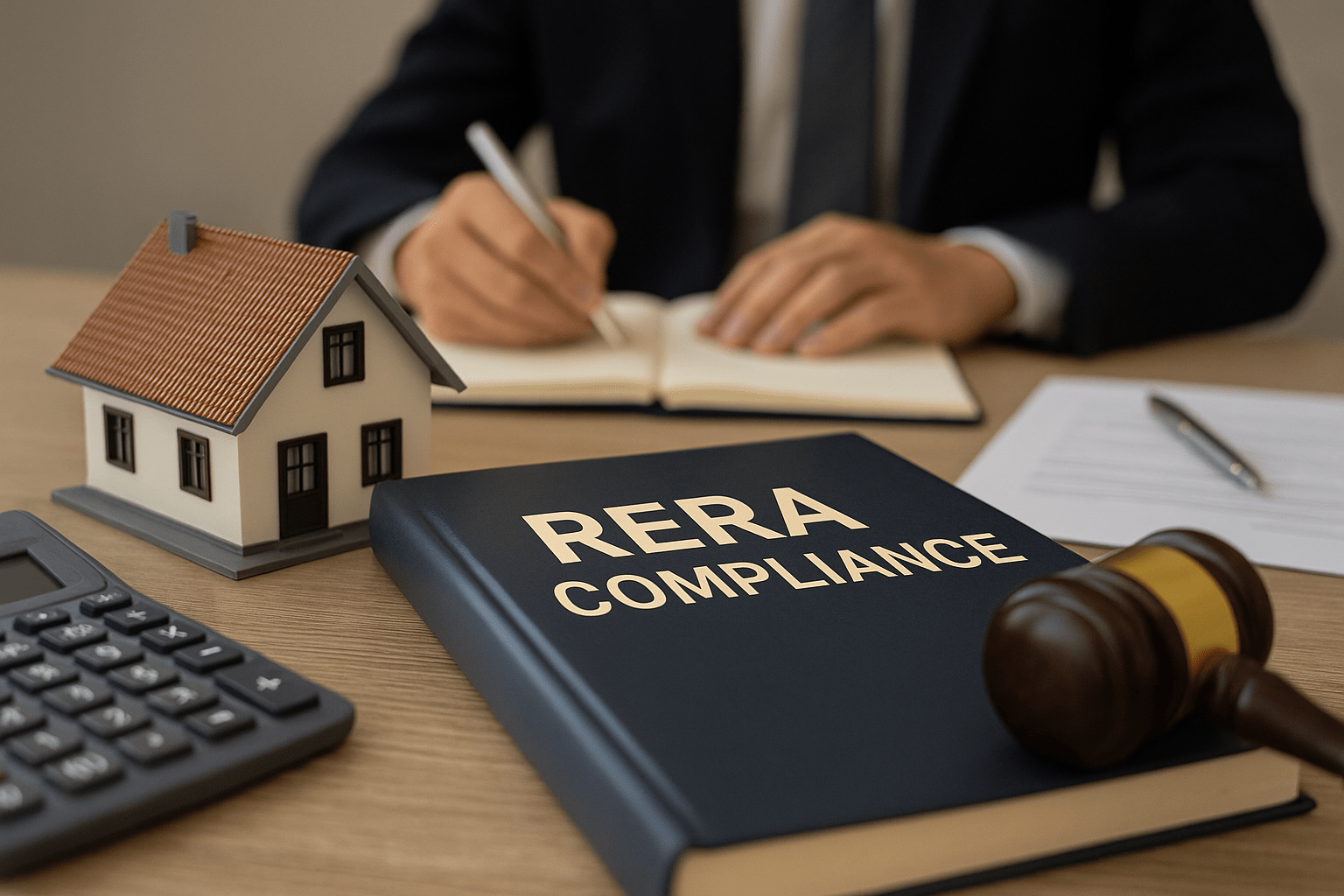
Since its introduction in 2016, the Real Estate (Regulation and Development) Act (RERA) has become a cornerstone of India’s real estate sector. It’s not just a legal framework, it’s a trust-building mechanism aimed at protecting buyers, bringing transparency, and holding developers accountable.
For anyone involved in real estate, homebuyers, developers, or agents, understanding RERA compliance is no longer optional. It’s essential.
What Is RERA and Why Does It Matter?
Before RERA, the real estate market in India was plagued by inconsistent delivery timelines, misleading advertisements, and a lack of transparency. RERA was introduced to address these very issues.
The law’s three main objectives are:
- Transparency in project approvals, timelines, and finances
- Protection of homebuyers from delays and false promises
- Accountability for developers and intermediaries
Each state has its regulatory authority under the Act, like MahaRERA in Maharashtra and UP-RERA in Uttar Pradesh, to ensure compliance at the local level.
Who Needs to Comply with RERA?
1. Real Estate Developers (Promoters)
Any residential or commercial project that exceeds 500 sq. metres or has more than 8 apartments must be registered under RERA before being marketed or sold.
2. Real Estate Agents/Brokers
Agents facilitating the sale or promotion of RERA-registered projects must themselves be registered with the relevant state authority.
RERA Compliance Checklist for Developers
Project Registration
Developers must:
- Register the project with their state’s RERA authority
- Submit key documents: land titles, approved plans, timelines, and cost estimates
- Mention the RERA registration number on all advertisements and brochures
Escrow Account for Buyer Funds
- 70% of the funds collected from buyers must go into a separate escrow account
- These funds can only be used for that specific project’s construction and land costs
- This limits misuse and ensures better fund management
Timely Delivery
- Developers must commit to a delivery date and are liable for penalties or buyer compensation if the project is delayed.
Clear Legal Title
- They must disclose the ownership and status of the land
- Any encumbrances, disputes, or legal claims must be revealed upfront
Truthful Marketing
- All project details, carpet area, layout, amenities, must be clearly and truthfully presented
- RERA prohibits exaggerated claims or misleading imagery
RERA Rules for Real Estate Agents
Agents must:
- Register with RERA (valid typically for 5 years)
- Promote only registered projects
- Maintain transaction records and stay away from misrepresentation
- Clearly state the RERA number in all communication
How RERA Empowers Homebuyers
One of the biggest changes RERA has brought is a power shift, buyers now have rights backed by law:
- Full disclosure of project timelines, approvals, and carpet area
- Right to compensation or refund in case of delays or false promises
- Access to all project details on the RERA website
- Faster dispute resolution via RERA tribunals, no need to go through lengthy court procedures
Key Documents Required for Project Registration
To register a project, developers must submit:
- Promoter’s PAN and Aadhaar
- Land ownership/title documents and encumbrance certificates
- Approved plans, architectural drawings, and layout
- Estimated project cost and payment schedule
- Certifications from engineers, architects, and legal professionals
- Details of the escrow bank account
For developers, being RERA-compliant is more than just legal compliance, it builds credibility and trust. For agents, it adds legitimacy. And for buyers, it brings much-needed protection in a historically uncertain market.
RERA has brought structure where there was ambiguity, and trust where there was doubt.
In today’s real estate environment, compliance is not a burden. It’s a signal of integrity, a tool for market differentiation, and a long-term investment in reputation.