
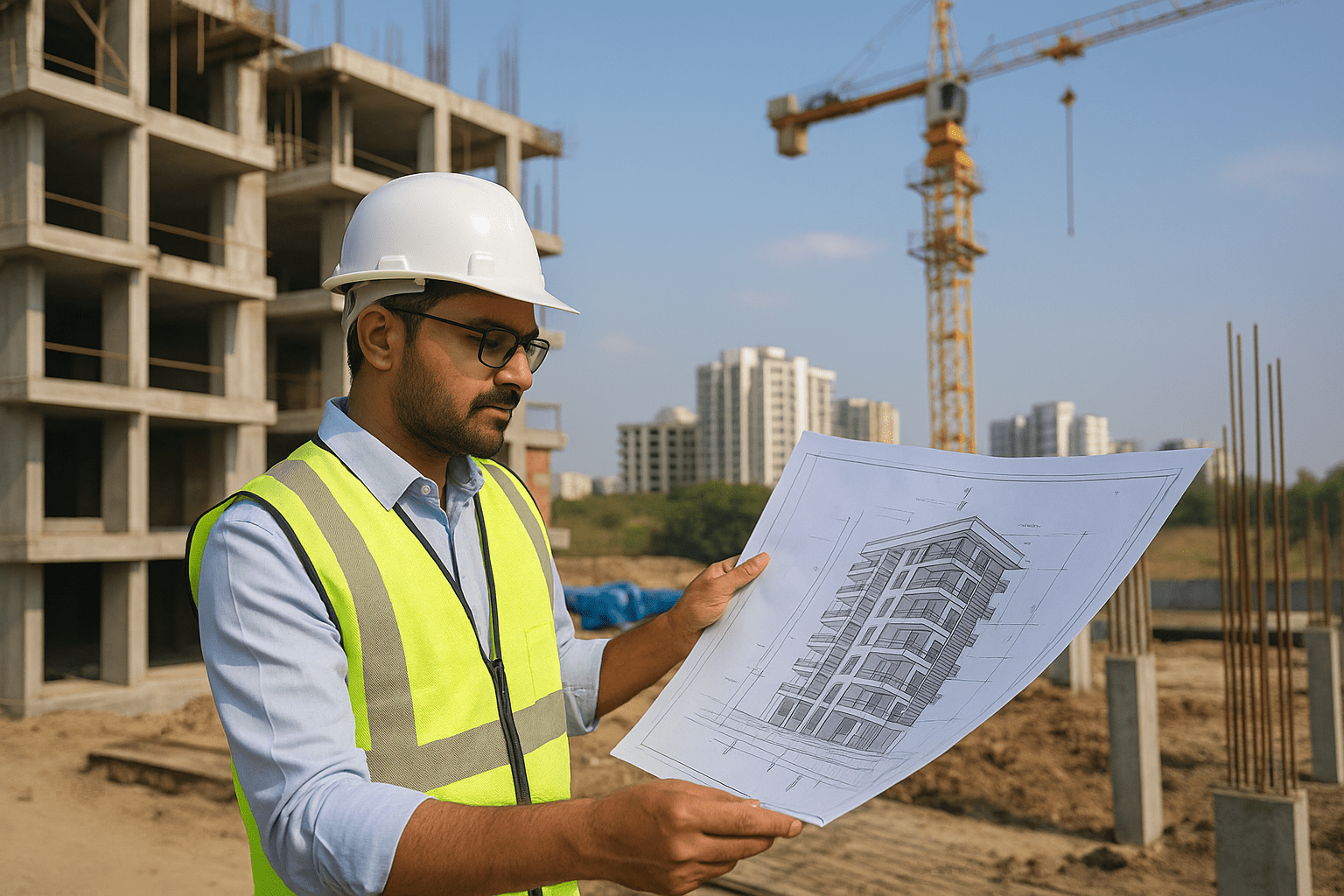
In India’s fast-evolving real estate landscape, the act of building a structure has become more than just stacking concrete and steel. Today, construction project management (CPM) is a sophisticated discipline, balancing compliance, capital, coordination, and control.
As cities grow vertically and projects grow in scale and complexity, effective project management isn’t just desirable, it’s essential to timely, compliant, and financially sound delivery.
The Seven Phases of Construction Project Management in India
1. Project Initiation & Feasibility
This is the foundation. Before any designs are drawn or materials ordered, the viability of the project is assessed:
- Land due diligence: title verification, zoning alignment, and FSI potential
- Regulatory feasibility: conformity with master/development plans
- Financial modeling: IRR, funding options, and projected cash flows
- Risk mapping: legal, political, and environmental factors
This phase is not just about having an idea, it’s about verifying that the idea is executable.
2. Planning & Design
Here, vision meets structure. Design elements are transformed into actionable plans:
- Finalisation of architectural, structural, and MEP designs
- Planning for environmental sustainability and green certifications
- Mapping approval timelines, Fire NOC, EC, AAI clearance, etc.
- RERA-aligned phasing and delivery planning
This stage is where creativity is translated into clear regulatory and engineering frameworks.
3. Pre-Construction
Often underestimated, this phase is crucial for de-risking the actual build:
- Selection of contractors, PMCs, vendors, and consultants
- Finalising BOQs and procurement schedules
- Site readiness: access, logistics, temporary utilities
- Setting up baseline cost, time, and quality benchmarks
Weakness in this stage often leads to cost overruns and delays later.
4. Construction Execution
This is the “build” phase, where strategy becomes structure:
- Coordinating civil, electrical, plumbing, and finishing work
- Ensuring site safety and labour compliance (especially under the BOCW Act)
- Managing phased approvals (plinth level, fire safety, occupancy)
- Maintaining timelines without compromising safety or quality
Project success here depends on disciplined site management and real-time issue resolution.
5. Monitoring & Control
This is an ongoing, data-driven phase of performance oversight:
- Cost monitoring vs. budgeted cash flow
- Schedule tracking via tools like Gantt charts or Primavera
- WIP validation and milestone-based billing
- Daily reporting, escalation mechanisms, and site audits
Effective monitoring uses technology to spot deviations before they become delays.
6. Commissioning & Handover
Completion doesn’t mean delivery, until this phase is executed:
- Testing and commissioning of all systems (MEP, safety, elevators)
- Acquiring the Occupancy Certificate (OC)
- Completing snag lists and final inspections
- Handover to buyers or facility management
At this stage, your reputation is not based on brochures, it’s based on what’s delivered.
7. Post-Construction & Maintenance
Increasingly, the post-handover phase is under the RERA spotlight:
- Defect liability coverage during the warranty period
- Transitioning to facility management teams
- Performance benchmarking (e.g., energy, water usage)
- Addressing homeowner complaints and closure tracking
Your brand equity, especially in residential development, is shaped by what happens after possession.
Best Practices for Success
- Hire an experienced Project Management Consultant (PMC)
- Integrate technology platforms (BIM, ERP, scheduling tools)
- Align procurement with cash flow to avoid financial strain
- Conduct periodic internal audits for cost and quality
- Factor in climate resilience, especially in monsoon-prone areas
Common Roadblocks in India
- Delayed approvals across fragmented regulatory bodies
- Labour compliance gaps
- Unplanned design changes (scope creep)
- Weak contract management in EPC or lump-sum models
- Disruptions due to weather, elections, or litigation
In a sector where delays, cost overruns, and buyer distrust are still common, robust project management is not just a support function, it is a competitive advantage.
For developers, it ensures delivery and credibility. For investors, it safeguards capital. And for end-users, it builds confidence in the final product.
Because in Indian construction today, what you manage well is what you deliver well.