
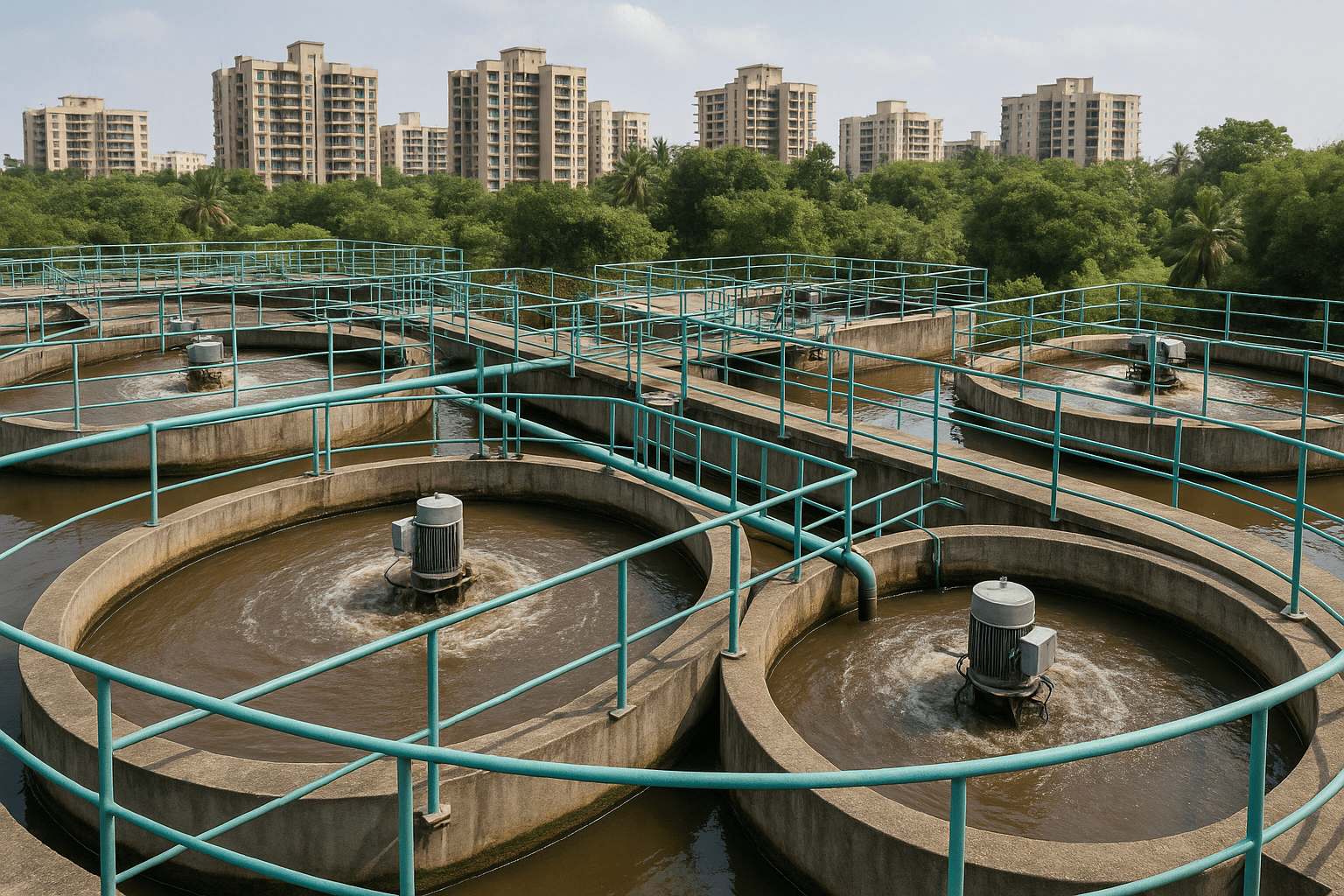
As Indian cities grow taller and denser, managing wastewater responsibly is no longer optional, it’s essential. Whether it’s a large housing complex, a gated community, or an integrated township, a well-designed wastewater treatment system (WWTS) is now a core component of sustainable urban living.
For developers, Resident Welfare Associations (RWAs), and planners, it’s not just about meeting legal requirements, it’s about protecting public health, conserving water, and ensuring long-term livability.
This guide outlines the key steps and considerations for designing and managing effective wastewater treatment systems in residential projects, with a special focus on the Indian urban context.
1. Know the Rules: Regulatory Requirements
Before starting any technical work, it’s critical to understand the regulatory framework:
- Environmental Clearance: Projects with a built-up area of 20,000 sq. m or more must comply with the EIA Notification, 2006. An STP is a mandatory part of this process.
- Pollution Control Board Norms: The CPCB and State Pollution Control Boards (SPCBs) mandate the inclusion and proper operation of STPs in large housing societies.
- Building Bye-Laws & NBC Guidelines: Promote reuse of treated water, installation of dual plumbing, and rainwater harvesting—measures that complement wastewater treatment.
2. Estimate Wastewater Generation Accurately
Right-sizing your system starts with knowing how much wastewater the community will generate.
- Standard Estimate: Each resident uses ~135 litres of water per day. About 80% becomes wastewater.
This figure helps in designing treatment capacity, plumbing infrastructure, and storage.
3. Make Treated Water Work for You
Treated wastewater, especially at the tertiary level, can be safely reused for:
- Flushing (via dual plumbing)
- Garden and lawn irrigation
- Car washing
- Cooling towers in HVAC systems
- Decorative fountains or landscapes
This reduces pressure on fresh freshwater supply and may also help you earn green building points (e.g., IGBC/LEED certification).
4. Focus on Long-Term Operations and Maintenance
Installing an STP is just the beginning. Reliable operations require:
- Trained operators or third-party facilities management (FM) services
- Regular desludging and performance checks
- SCADA or IoT systems to track water quality (BOD, COD, pH, TSS, etc.)
- Annual audits for compliance with discharge norms
Energy-efficient systems, low-chemical designs, and automation can reduce operational costs over time.
5. Plan for Cost: CAPEX and OPEX
- Capital Costs (CAPEX): Civil construction, machinery, pumps, control systems
- Operating Costs (OPEX): Electricity, staffing, chemicals, repairs—electricity alone can be 30–40%
- Who Pays? Usually covered by the developer upfront (under RERA rules), and passed on via maintenance fees.
In some states, government subsidies or green incentives may be available for such infrastructure.
6. Don’t Forget Community Involvement
No system runs well without user cooperation. RWAs should:
- Educate residents about the system, especially around what not to flush
- Encourage the separation of greywater and blackwater, where possible
- Budget annually for maintenance and upgrades
- Monitor illegal dumping or overuse of freshwater
Behavioural awareness is just as important as technical design.
Wastewater treatment in Indian housing societies is now a must-have, not a luxury. But when done right, it’s also a powerful contribution to:
- Local water conservation
- Public health and hygiene
- Long-term sustainability of cities
With the right design, operational planning, and resident engagement, housing societies can move from being passive consumers to active contributors to water resilience.
In today’s India, a good STP isn’t just a technical solution, it’s a mark of civic responsibility and forward-looking urbanism.