
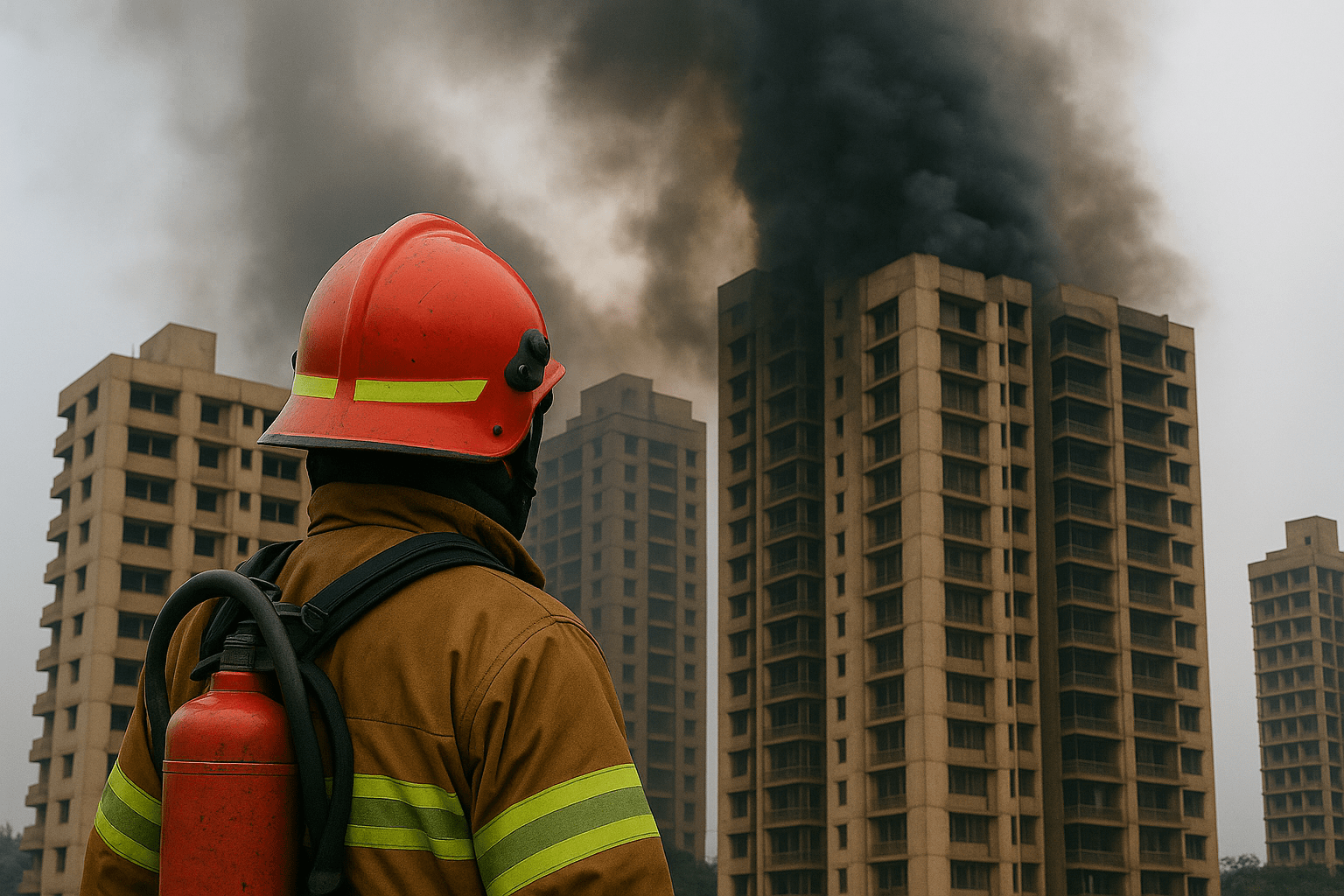
As Indian cities expand vertically, high-rise buildings have become a common feature of the urban landscape, from luxury towers in Mumbai to residential blocks in Tier 2 cities like Indore and Coimbatore. But as buildings reach new heights, so too do the safety risks, particularly fire hazards.
In this environment, fire safety is not just a regulatory requirement, it’s a vital element of urban livability and public trust. Yet it remains a challenge due to uneven enforcement, outdated practices, and limited awareness among stakeholders.
What Qualifies as a High-Rise in India?
According to the National Building Code (NBC) of India, 2016, any building taller than 15 metres (roughly five floors) is classified as a high-rise. This classification is important because it marks the point where ground-based fire-fighting becomes less effective, requiring built-in safety systems and strict regulatory oversight.
The Regulatory Landscape: Complex but Evolving
Fire safety in India is governed by a combination of:
- NBC, Part 4 – Fire and Life Safety
- State Fire Services Acts and local Development Control Regulations (DCRs)
- Municipal Fire Departments, which issue and verify the Fire NOC (No Objection Certificate)
While the NBC serves as a national reference, its enforcement is not uniform across states, and much depends on how actively local authorities implement and update fire norms.
Fire Safety Features Required in High-Rise Buildings
Here are the core safety features mandated for high-rises:
Fire Extinguishers and Hose Reels
Placed on every floor, with types suited to specific risks, such as electrical fires or cooking oil.
Hydrant Systems
A network of high-pressure water outlets across the building’s key zones, basements, corridors, and entrances, to support internal and civic firefighting.
Automatic Sprinkler Systems
Required in residential buildings over 30 metres and commercial buildings over 15 metres, these activate automatically when heat is detected, limiting fire spread early.
Detection and Alarm Systems
A connected grid of smoke detectors, manual alarms, and central control panels provides early warnings and initiates evacuation procedures.
Signage and Evacuation Plans
Marked, glow-in-the-dark exit signs, along with floor-wise escape maps, are essential for visibility in smoke-filled or dark conditions.
Refuge Areas
Every residential tower above 24 metres must have a refuge area at least once every 24 metres of height, covering 4% of that floor’s area. These provide temporary safety when evacuation is not immediately possible.
Understanding the Fire NOC
The Fire NOC is a critical legal and safety document that certifies the building’s design and systems meet required fire norms. Developers must secure:
- A provisional NOC at the construction stage
- A final NOC before occupancy
Failure to obtain or renew the NOC means the building is not legally occupiable, and insurance claims may be denied in case of fire incidents. Some states are now linking NOC validity to periodic fire safety audits, ensuring ongoing compliance, not just one-time certification.
Challenges on the Ground
Despite clear frameworks, several challenges persist:
- Inconsistent enforcement across municipalities
- Outdated building stock lacking retrofit-friendly infrastructure
- Low awareness among residents about evacuation procedures
- Neglect of periodic maintenance of safety equipment
Responsibility Is Shared
Fire safety is not just a technical or legal issue; it’s a matter of collective responsibility. Stakeholders include:
- Developers, who must build with compliance and future maintenance in mind
- Architects and engineers, who design safe evacuation routes and install robust systems
- Municipal bodies, which must enforce standards and respond swiftly
- Residents, who should be informed and vigilant
In India’s fast-urbanising cities, high-rises are not just structures, they are ecosystems of daily life. When it comes to fire safety, cutting corners can have devastating consequences.
As we build taller, let us also build safer. Because in high-rise living, fire safety is not just about systems and certifications, it’s about lives.