
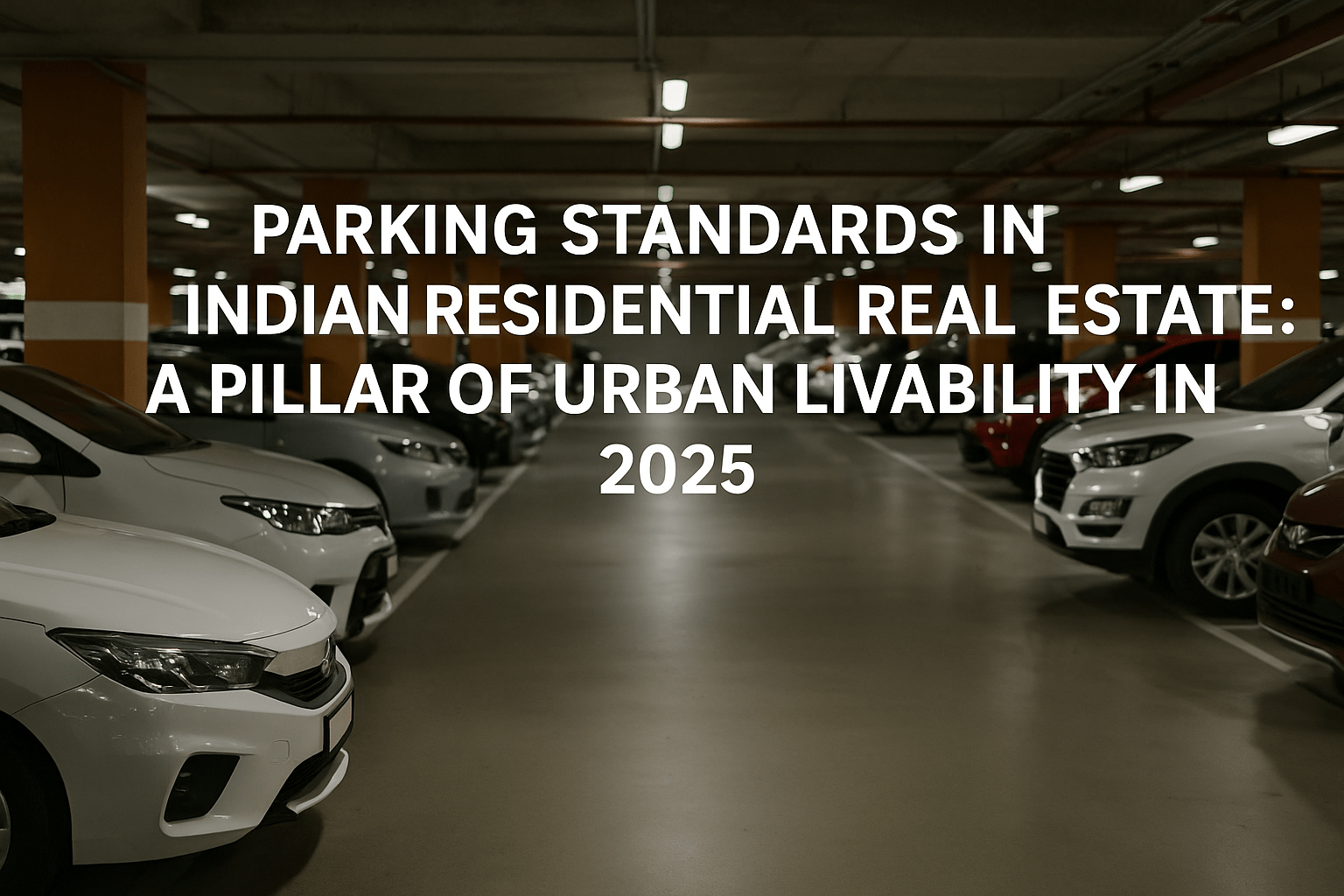
As Indian cities grow taller and denser, parking has quietly emerged as one of the most critical, and often overlooked, elements of urban living. It influences not just convenience but safety, property value, neighbourhood dynamics, and even environmental sustainability.
For developers, buyers, and urban planners, understanding parking standards is no longer optional. It’s a vital piece of the real estate puzzle.
Why Do Parking Norms Matter?
In crowded urban environments, parking isn’t just a matter of personal comfort, it’s a planning necessity. Well-defined parking regulations help:
- Make better use of limited urban land
- Prevent haphazard roadside parking and traffic congestion
- Ensure emergency and fire vehicle access
- Maintain property aesthetics and orderly design
- Support the broader mobility ecosystem, including shared and public transport
In cities like Mumbai, Bengaluru, or Delhi, where land is scarce and car ownership is growing, parking norms serve as both an infrastructure tool and a behavioural nudge, encouraging smarter mobility choices and sustainable urban living.
Who Regulates Parking?
Parking provisions are governed at multiple levels:
- Municipal Corporations (e.g., BMC, BBMP, MCD)
- Urban Development Authorities (e.g., DDA, HMDA, CMDA)
- State-level Development Control Rules (DCR)
- National Building Code (NBC), which provides model guidelines that are adapted to local needs
These norms vary by city and are influenced by local land availability, population density, and trends in vehicle ownership. For example, Mumbai’s compact zones demand a very different approach compared to the spread-out residential colonies of Lucknow or Jaipur.
Types of Residential Parking
Residential projects may offer different types of parking, depending on land area, project scale, and regulatory requirements:
- Stilt Parking: Located below the first residential floor; common in mid-rise apartments.
- Basement Parking: Below-ground parking is essential in high-rises.
- Open Parking: Surface-level parking inside the premises; increasingly discouraged due to fire safety and civic misuse.
- Mechanical/Automated Parking: Space-saving systems, like stackers and puzzle lifts, are popular in dense cities.
- Visitor Parking: Required by law (typically 5–10% of built-up area), but often neglected in practice.
Challenges and Grey Areas
Despite formal rules, practical challenges remain:
Illegal Sale of Open Parking
The Supreme Court (Nahalchand Laloochand vs Panchali CHS, 2010) ruled that open parking is part of common space and cannot be sold separately. Still, many developers flout this, especially in unregulated markets.
Lack of Transparent Allocation
Buyers are often unclear about how parking slots are assigned, leading to disputes among residents and societies post-possession.
Under-Provisioning
Some developers, especially in budget housing, skip basement construction to reduce costs, resulting in inadequate parking for residents.
Encroachments
Parking areas are sometimes repurposed as storage rooms or even illegal shops, compromising both legality and safety.
What Buyers Should Check
Before purchasing, do your due diligence:
- Is the parking mentioned in the agreement for sale?
- Is the builder complying with local parking norms and FSI rules?
- Are visitor parking areas marked and maintained?
- For mechanical systems, is there regular maintenance and operational efficiency?
- Has the builder obtained fire safety clearance and basement NOCs?
For Developers: Why Good Parking Design Pays Off
- Transparent, compliant parking allocation builds buyer trust
- Following norms reduces legal risks and post-handover conflicts
- Future-proofing parking with EV charging infrastructure and automated systems enhances project value
- Better planning improves circulation, aesthetics, and resale potential
Parking as an Indicator of Real Estate Maturity
In fast-urbanizing India, parking is much more than a functional need, it’s a barometer of planning quality, legal compliance, and lifestyle consideration. Projects that take mobility seriously, balancing car access with walkability, public transport proximity, and sustainability, are more likely to stand the test of time.
Because in real estate, a well-designed parking plan doesn’t just support cars.
It supports the city’s future.