
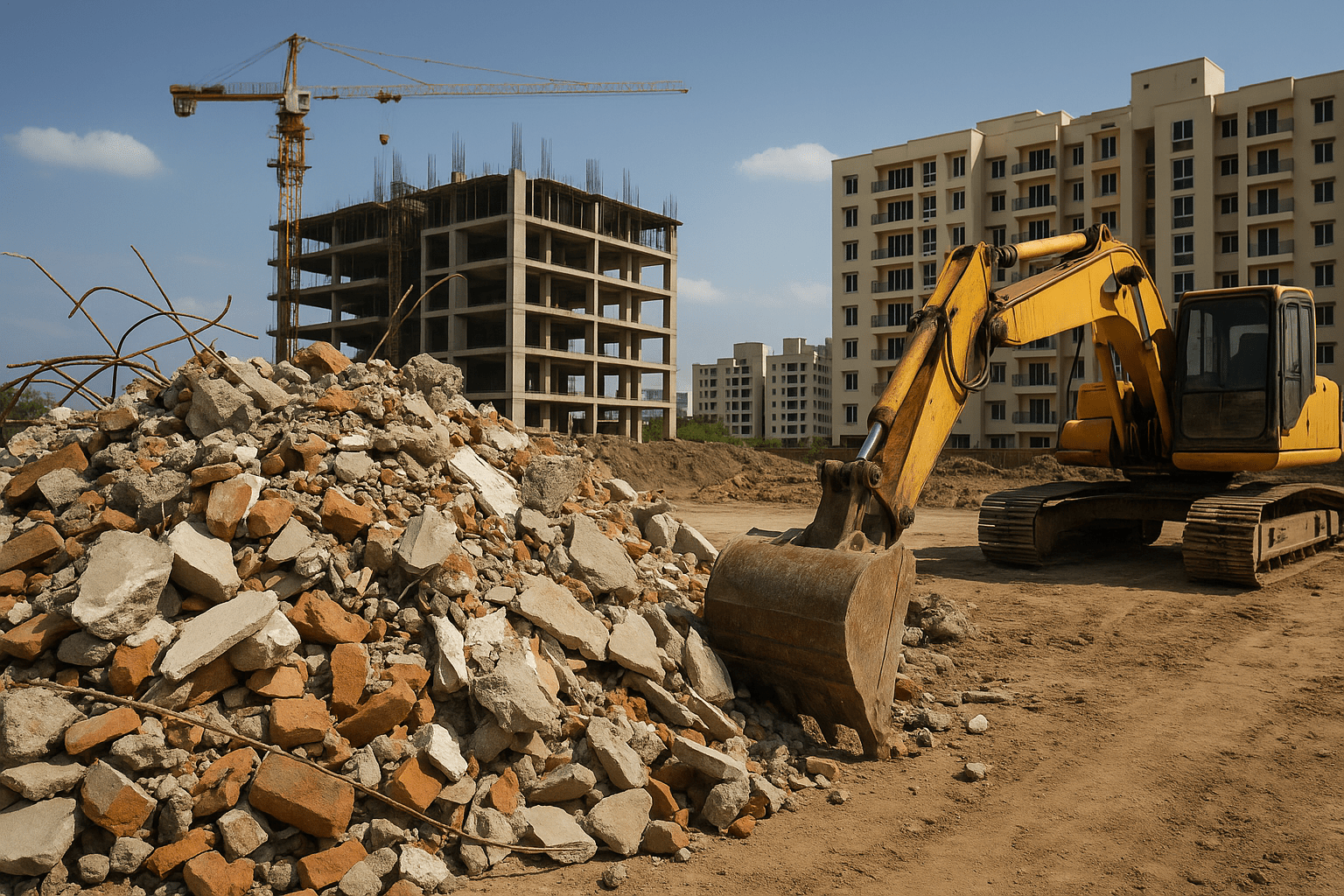
As India’s urban fabric expands at an unprecedented pace, driven by infrastructural ambition and real estate proliferation, construction and demolition (C&D) waste has emerged as a formidable challenge to sustainability. The sector contributes an estimated 150 million tonnes of C&D waste annually, with a glaring gap between generation and recycling. Yet, this byproduct of development is also a latent resource, waiting to be harnessed through systemic planning and regulatory discipline.
In this context, construction waste management must be viewed not as an afterthought but as a strategic pillar in project lifecycle planning, especially as ESG compliance and sustainable urbanism become non-negotiable markers of credibility and investment worthiness.
Understanding Construction Waste: From Debris to Resource
C&D waste in India typically comprises concrete, bricks, mortar, steel, wood, plastics, glass, soil, and packaging detritus. A significant portion is inert and recyclable, yet much of it ends up clogging landfills or is illegally dumped due to fragmented handling practices and limited processing infrastructure.
The Construction and Demolition Waste Management Rules, 2016, promulgated by the Ministry of Environment, Forest and Climate Change (MoEFCC), mandate all stakeholders, from developers and contractors to urban local bodies (ULBs), to ensure waste segregation, safe storage, transportation, and channelization to authorized processing facilities.
However, the challenge is not just compliance, it is about reimagining waste as a value stream.
Strategic Best Practices: A Framework for Sustainable Execution
1. Designing Out Waste from the Start
Integrate waste minimization into architectural and construction design:
- Adopt modular construction and prefabrication to reduce off-cuts.
- Standardize component dimensions to optimize material usage.
- Specify low-embodied carbon, recyclable building materials.
- The design phase is where avoidable waste is either embedded or eliminated.
2. Segregation at Source: The Cornerstone of Recovery
Waste must be categorized on-site into:
- Recyclables: metals, plastics
- Inert materials: concrete, bricks, tiles
- Hazardous waste: chemical containers, paints
This is not just a procedural compliance measure but a prerequisite for efficient downstream recycling and safety management.
3. Operationalizing Reuse: Closing the Loop
- Reuse rubble for site grading or road base.
- Repurpose steel or formwork timber.
- Salvage tiles and fixtures in retrofit projects.
- Each reuse case contributes to cost containment and reduced environmental footprint.
4. Engaging Certified C&D Waste Processors
Partner with authorized recycling units or waste management firms for:
- Collection and compliant transportation
- Aggregate recovery and sand reconstitution
- Scientific disposal of residues
Such collaborations help align with both CPCB norms and local state pollution control regulations while building transparency into waste handling logistics.
5. In-House Recycling Systems: A Scalable Investment
For large-scale or continuous development projects, on-site crushing units, compactors, and water filtration systems can yield:
- Lower transport overhead
- Decreased carbon emissions
- Immediate reuse of material for internal civil works
It’s not merely cost-effective, it reflects operational foresight and commitment to circular construction.
Strategic Value of Construction Waste Management
- Regulatory Compliance: Proactive adherence reduces the risk of project delays, fines, and reputational damage.
- Cost Optimization: Material recovery and reduced procurement costs can yield substantial savings over time.
- ESG Alignment: Demonstrates tangible environmental stewardship, critical for REITs, institutional investors, and green building certifications.
- Site Efficiency & Safety: Structured waste handling improves worker safety, reduces clutter, and accelerates project throughput.
In India’s transition to sustainable urbanism, construction waste is not merely a logistical nuisance, it is a barometer of ecological intelligence and project governance. Integrating its management into the DNA of project execution, backed by data, technology, and stakeholder alignment, is no longer optional.
As the built environment continues to shape the nation’s economic future, handling what we discard will be as important as what we build.