
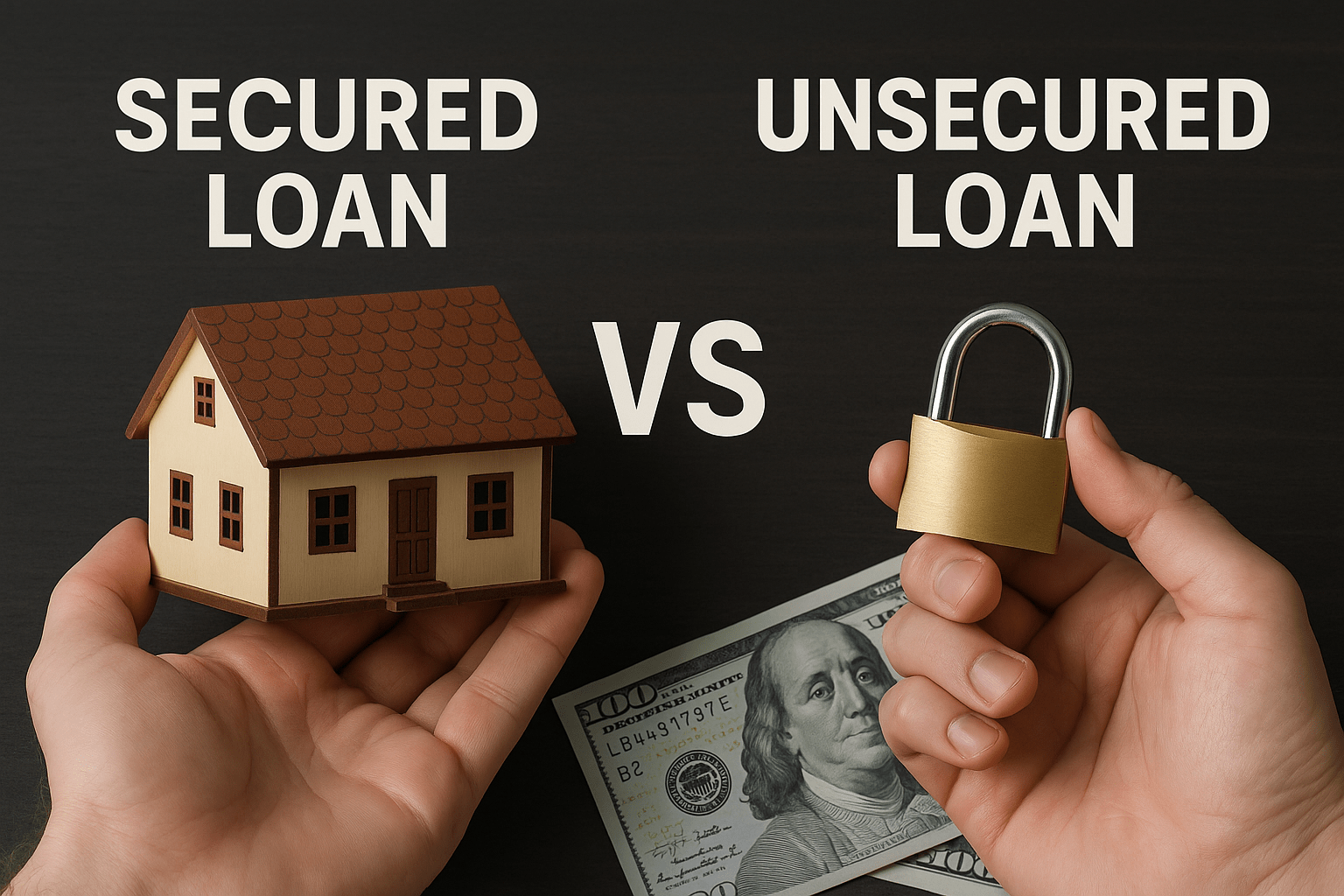
In the intricate ecosystem of Indian real estate finance, the distinction between secured and unsecured loans carries far-reaching implications for borrowers, lenders, and even market stability. As property transactions grow in complexity, spanning residential, commercial, and plotted developments, understanding the mechanics of loan structures becomes essential not just for financial prudence but also for long-term asset security.
This article unpacks the conceptual and practical differences between secured and unsecured loans in property acquisition, enabling borrowers to align their financing strategy with risk appetite, repayment capacity, and investment goals.
Defining the Instruments
Secured Loans
A secured loan is underpinned by collateral, typically the property itself, which acts as a legal guarantee for the lender. In the event of a default, the lender can repossess or liquidate the asset to recover dues. This risk-mitigation mechanism allows lenders to offer relatively favorable terms.
Salient Features:
- Collateral Requirement: The asset being financed is mortgaged to the lending institution.
- Lower Interest Rates: Due to collateral-backed security, interest rates are more competitive.
- Higher Sanction Limits: Developers and homebuyers can access larger ticket sizes, supporting expansive project ambitions or premium purchases.
- Extended Tenure: Repayment periods can span up to 30 years, making EMIs more manageable.
- Common Types: Home loans, construction finance, and loan against property (LAP).
Unsecured Loans
In contrast, unsecured loans are granted based solely on the borrower’s financial profile, credit history, income consistency, and repayment behavior, without any asset pledge. These are often used to cover auxiliary real estate expenses rather than core acquisition.
Key Characteristics:
- No Collateral: The borrower is not required to mortgage any property.
- Higher Interest Rates: Reflecting the lender’s increased risk.
- Limited Loan Amounts: Generally suited for short-term needs like down payments or renovation costs.
- Shorter Repayment Cycles: Tenures typically range from 1 to 5 years.
- Use Cases: Personal loans for property-related cash gaps, bridging finance.
Strategic Considerations for Borrowers
Opt for Secured Loans When:
- You’re purchasing or constructing a property and require significant capital.
- You’re seeking interest rate efficiency and longer repayment flexibility.
- You’re comfortable pledging the asset and have a clear title with all due diligence in place.
Opt for Unsecured Loans When:
- You need a smaller, quick-disbursal loan without navigating the complexities of property documentation.
- You’re bridging short-term liquidity gaps or funding non-core costs (e.g., interior work).
- You have a robust income and credit profile that justifies unsecured borrowing.
Regulatory and Institutional Oversight
All property loans in India fall under the regulatory purview of the Reserve Bank of India (RBI). They are disbursed via commercial banks, Non-Banking Financial Companies (NBFCs), or Housing Finance Companies (HFCs). The onboarding process involves:
For Secured Loans: Legal title verification, valuation reports, and encumbrance checks.
For Unsecured Loans: Scrutiny of credit score (typically 700+), income tax returns, salary slips, and bank statements.
Additionally, RERA-compliant properties improve the confidence quotient for secured lending, while unsecured loan applicants benefit from stable employment histories and demonstrable repayment records.
In a property transaction, arguably one of the most consequential financial decisions for an individual or entity, the choice of loan structure must be approached not as a binary but as a continuum of risk and utility. Secured loans offer leverage and longevity but require asset encumbrance and procedural rigor. Unsecured loans provide agility and autonomy but demand fiscal discipline due to higher costs and shorter tenures.
As the Indian real estate market matures, with rising investor sophistication and evolving credit ecosystems, borrowers must move beyond superficial comparisons. They should instead undertake a comprehensive evaluation of financing instruments, guided by long-term asset objectives, liquidity scenarios, and regulatory dynamics.