
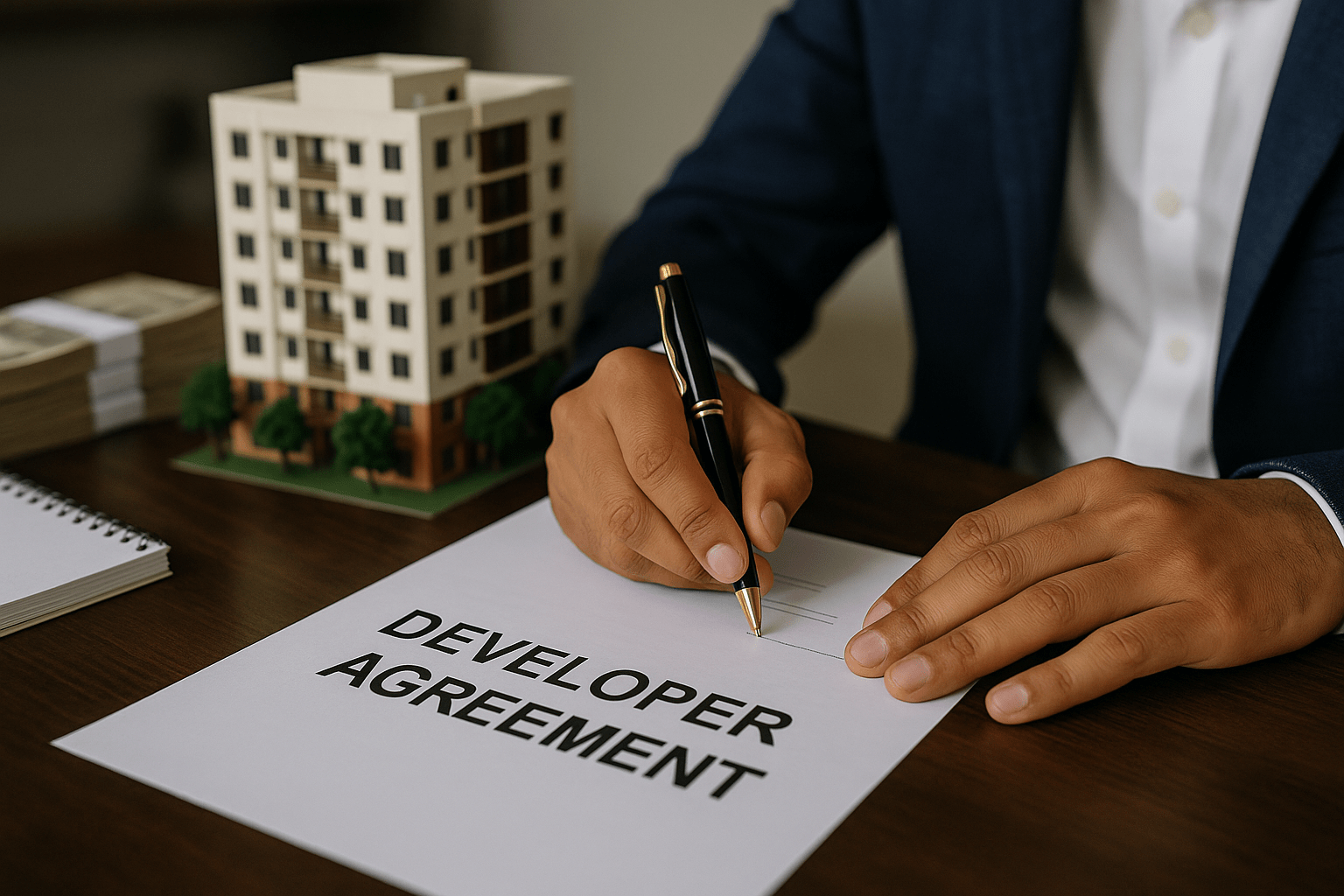
As cities in India grow and land becomes scarce, many real estate projects today are developed through joint ventures between landowners and builders. These partnerships are governed by a crucial legal document: the Developer Agreement, also called a Joint Development Agreement (JDA).
While often treated as a routine formality, a well-structured Developer Agreement can make or break a project. It defines the legal, financial, and operational framework of the partnership and plays a key role in protecting all stakeholders, landowners, developers, financiers, investors, and eventually homebuyers.
What Is a Developer Agreement?
A Developer Agreement is a legally binding contract between a landowner and a real estate developer. It outlines how a project will be executed, who is responsible for what, how the profits or built-up area will be shared, and what happens if things go wrong.
- The landowner contributes the land.
- The developer brings in money, construction expertise, approvals, and sales capabilities.
In return, each party receives a pre-agreed share, either of developed units or revenue.
Key Elements of a Developer Agreement
A solid agreement, usually drafted by a legal expert, should cover:
1. Title and Ownership Verification
- Confirms that the landowner has clear, marketable title to the land.
- Ensures there are no loans, disputes, or legal encumbrances.
2. Scope of Development
- Defines the type of project (residential, commercial, mixed-use).
- Mentions phases, total construction area, and key deliverables.
3. Regulatory Compliance
- Includes developer’s responsibilities under RERA, and other approvals like environmental clearances and building plans.
4. Revenue or Area Sharing
- Clearly states how the returns will be split:
- Either as a share of constructed units (area sharing),
- Or as a share of income from sales (revenue sharing).
- Either as a share of constructed units (area sharing),
5. Cost Responsibilities
- Specifies who pays for approvals, registration, GST, marketing, etc.
6. Timelines and Penalties
- Sets completion and possession dates.
- Details penalties if the developer delays delivery.
7. Termination and Exit Terms
- Defines what happens in case of breach, insolvency, force majeure, or failure to perform.
Why Developer Agreements Are So Important
1. Legal and Financial Backbone
It forms the legal basis for project funding, registration, and execution. Banks and investors will not proceed without it.
2. Boosts Investor Confidence
Professional, enforceable agreements build trust among private equity investors, REITs, and other institutional players.
3. Supports Regulatory Filing
Under RERA, a Developer Agreement is a mandatory disclosure. Projects cannot be registered without it.
4. Clarifies Roles and Prevents Conflict
Clearly assigned roles ensure there’s no confusion on who does what, approvals, sales, construction, etc, reducing delays and disputes.
5. Reduces Legal and Operational Risks
A detailed agreement protects both parties from:
- Disputes over ownership or revenue
- Regulatory violations
- Project halts due to non-compliance
Risks of Weak or Informal Agreements
If the Developer Agreement is vague, unregistered, or missing key clauses, it can lead to:
- Legal battles between the landowner and the developer
- Delays in funding, approvals, or construction
- Loss of buyer confidence
- Exposure to RERA or consumer litigation
In Indian real estate, the Developer Agreement is not just a contract, it’s the foundation for everything that follows: approvals, construction, sales, and delivery.
If you’re a landowner, it protects your asset and defines your return.
If you’re a developer, it secures your right to build and monetize.
And if you’re an investor or buyer, it signals transparency and professionalism.
Tip: Always involve a qualified property lawyer to draft, review, and register the agreement. This isn’t just good practice, it’s essential risk protection.